I. Introduction: Why Do Baking Pans Fail Over Time?
If you bake often, you’ve probably experienced this at least once.
You place a pan into the oven—and suddenly hear a sharp “pop” or “bang.”
After baking, the pan no longer sits flat. In some cases, a glass baking dish
may even develop cracks or shatter unexpectedly.
These issues are far more common than most people realize—and in most cases,
they are not caused by user error.
Warping and cracking are usually the result of material limitations,
thermal stress, and mismatched usage conditions.
In reality, baking pans fail because of:
Improper material selection for high-temperature use
Uneven heating or rapid temperature changes
Thermal expansion and internal stress being ignored
In this guide, we’ll break down exactly:
What warping and cracking really mean in baking pans
The most common causes behind these failures
How to avoid them through better material choices and
usage habits
II. What Does “Warping” or “Cracking” Mean in Baking Pans?
Before discussing causes and solutions, it’s important to clearly understand
what warping and cracking actually mean.
Although both are forms of damage, they occur in different materials
and follow very different mechanisms.
A. What Is Warping?
Warping refers to a permanent or semi-permanent deformation
of a baking pan caused by uneven thermal expansion.
It most commonly occurs in metal baking pans when exposed to high heat.
As the pan heats up, different areas expand at different rates.
If the material lacks sufficient thickness or structural stability,
this uneven expansion causes the pan to bend or distort.
Common signs of warping include:
A raised or bulging center at the bottom
Corners that no longer sit flat
The pan rocking or wobbling on a flat surface
Once a pan is warped, it rarely returns fully to its original shape,
and uneven heat distribution during baking often follows.
B. What Is Cracking?
Cracking is most commonly seen in glass and ceramic baking dishes.
Unlike metal warping, cracking occurs when internal stress exceeds
the material’s ability to withstand it.
Glass and ceramic are rigid, non-flexible materials.
When exposed to uneven heating or sudden temperature changes,
stress builds up inside the structure and may be released in the form of cracks—or complete
breakage.
Cracking is typically caused by:
Uneven or localized heating
Sudden temperature changes (thermal shock)
Residual internal stress from manufacturing
Understanding the difference between warping and cracking is essential.
Metal pans fail through deformation, while glass and ceramic fail through fracture—
and each requires a different prevention strategy.
Warping does not happen randomly. In most cases, it is the predictable result
of how metal baking pans respond to heat. Understanding these root causes
will help you identify whether a pan is likely to warp before it ever goes into the oven.
A. Uneven Heating and Rapid Temperature Changes
Metal expands when heated. However, when different parts of a baking pan heat up
at different speeds, uneven expansion occurs. This imbalance creates internal stress,
forcing the pan to bend or twist.
This is especially common when:
An empty or lightly loaded pan is placed into a fully
preheated oven
The pan is exposed to intense bottom heat without
sufficient airflow
A hot pan is moved directly onto a cold countertop or
metal surface
The faster the temperature change, the more aggressively the metal expands—
and the higher the risk of permanent deformation.
B. Thin Gauge Metal and Cost-Driven Design
Many mass-market baking pans are made from thin-gauge metal to reduce cost and weight.
While lightweight pans may be convenient, they lack the structural rigidity
needed to withstand repeated high-temperature cycles.
Thin metal heats up quickly but also cools rapidly, increasing thermal stress.
Over time, this repeated expansion and contraction weakens the pan’s shape memory,
making warping almost inevitable.
In contrast, thicker or reinforced pans distribute heat more evenly
and resist deformation far better.
C. Material Properties and Thermal Expansion Rates
Different metals expand at different rates when heated.
Aluminum, for example, has a relatively high thermal expansion coefficient,
which means it reacts quickly and dramatically to temperature changes.
If the pan design does not account for this natural expansion—through thickness,
rolled edges, or reinforced bases—the metal has nowhere to release stress
except by bending.
This is why two pans made of the same metal can perform very differently
depending on engineering and construction quality.
D. Repeated High-Temperature Cycling Over Time
Even a well-made baking pan is not immune to long-term thermal fatigue.
Each baking cycle slightly alters the metal’s internal structure.
Frequent exposure to high temperatures—especially above recommended limits—
gradually reduces the pan’s resistance to deformation.
Eventually, a pan that once remained flat may begin to warp
after routine use.
This is why warping is often described as something that “suddenly” happens,
when in reality, it is the final result of cumulative stress.
IV. Why Glass and Ceramic Baking Dishes Crack
Unlike metal baking pans, glass and ceramic dishes do not warp under heat.
Instead, they fail in a different way—by cracking or shattering.
This type of damage is often sudden and alarming, but it follows clear
physical principles related to heat stress and material structure.
A. Thermal Shock: The Primary Cause of Cracking
The most common reason glass and ceramic baking dishes crack is
thermal shock.
Thermal shock occurs when a material experiences a rapid and uneven temperature change,
creating internal stress that exceeds its structural tolerance.
Typical thermal shock scenarios include:
Placing a cold baking dish directly into a preheated oven
Adding cold liquids or frozen food to a hot glass or
ceramic dish
Removing a hot dish from the oven and placing it on a cold
or wet surface
When the outer surface expands or contracts faster than the interior,
stress builds rapidly—and cracking becomes unavoidable.
B. Internal Stress from Manufacturing and Design
Not all glass and ceramic bakeware is created equal.
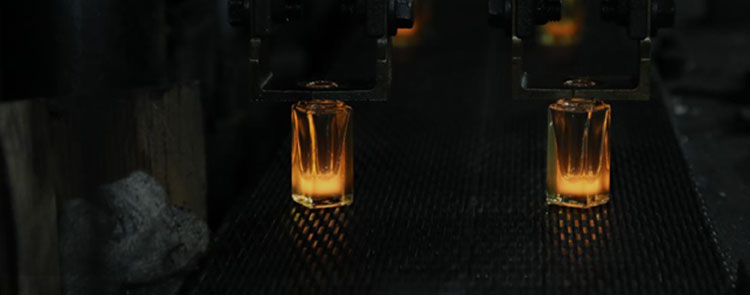
During manufacturing, residual internal stress can be introduced
if the material is not properly annealed or cooled at a controlled rate.
Poor-quality products may look intact on the surface,
but microscopic stress points already exist within the structure.
Under heat, these weak zones become fracture origins.
This explains why some dishes crack during normal use
without any obvious misuse.
C. Uneven Heating and Localized Hot Spots
Glass and ceramic materials heat more slowly than metal,
which can be an advantage for even baking—but only when heating is uniform.
Direct contact with heating elements, oven rack hot spots,
or concentrated heat sources can cause localized expansion.
When one area heats faster than the rest,
stress concentrates at the boundary between hot and cool zones.
Over time or under extreme conditions, this imbalance leads to cracking.
D. Material Differences: Soda-Lime Glass vs. Borosilicate Glass
One of the most overlooked factors is the type of glass itself.
Standard soda-lime glass has a relatively high thermal expansion coefficient,
making it more sensitive to sudden temperature changes.
In contrast, high borosilicate glass contains boron oxide,
which significantly reduces thermal expansion.
This allows the glass to withstand extreme temperature differentials
without cracking.
This is why borosilicate baking dishes are better suited for
freezer-to-oven or refrigerator-to-microwave use,
while standard glass requires more cautious handling.
E. Cumulative Damage from Repeated Use
Even when thermal shock does not cause immediate failure,
repeated exposure to stress can weaken glass and ceramic over time.
Small, invisible microfractures may form with each heating cycle.
Eventually, what seems like a routine baking session
can trigger a sudden crack or break.
This is often mistaken as a defect,
when it is actually the result of accumulated stress.
V. How to Prevent Warping and Cracking in Daily Baking
While some degree of wear is inevitable, most baking pan warping and cracking
can be avoided with the right material choice and proper daily use.
Understanding how heat, stress, and handling interact allows you to
significantly extend the lifespan of your bakeware.
A. Choose the Right Material for the Right Task
Prevention starts with material selection.
Each type of bakeware responds differently to heat,
and using the wrong material for certain cooking scenarios
dramatically increases the risk of damage.
Use thicker, reinforced metal pans for high-temperature roasting and broiling
to minimize warping.
Choose high borosilicate glass for applications that involve temperature changes,
such as freezer-to-oven or refrigerator-to-microwave use.
Avoid low-quality ceramic dishes for high-heat or rapid heating scenarios.
Matching the material to the cooking method is the most effective way
to prevent premature failure.
B. Avoid Sudden Temperature Changes
Thermal shock is the leading cause of cracking in glass and ceramic bakeware.
To reduce risk, always allow your baking dish to transition gradually
between temperature extremes.
Let refrigerated or frozen dishes rest at room temperature
before baking
Avoid placing hot bakeware directly on cold, wet, or metal
surfaces
Do not add cold liquids to a hot dish
Small adjustments in handling can prevent catastrophic breakage.
C. Preheat Thoughtfully and Load Pans Properly
Empty or unevenly loaded pans are more likely to warp.
Food acts as a thermal buffer, helping distribute heat more evenly
across the pan’s surface.
When preheating ovens:
Avoid placing empty metal pans in a fully preheated oven
Ensure food is evenly distributed within the pan
Use center oven racks to promote balanced heat exposure
D. Respect Temperature Limits and Usage Guidelines
Every baking pan has a recommended temperature range.
Consistently exceeding these limits accelerates metal fatigue
and increases the likelihood of cracking or warping.
This is particularly important for glass and ceramic bakeware,
which should never be exposed to direct flames or broiler settings
unless explicitly designed for such use.
E. Inspect, Maintain, and Replace When Necessary
Routine inspection plays a critical role in bakeware safety.
Warped metal pans and cracked glass dishes should not be ignored.
Replace pans that no longer sit flat
Discontinue use of bakeware with visible cracks or chips
Avoid stacking heavy items on top of glass or ceramic
dishes
Proactive replacement reduces safety risks and ensures consistent baking results.
VI. Which Baking Pan Material Lasts the Longest?
Durability is one of the most important factors when choosing baking pans.
While all materials experience wear over time, some are inherently better
suited to withstand repeated heating, cooling, and daily kitchen use.
A. Metal Baking Pans: Durable but Not Deformation-Proof
Metal baking pans—especially those made from aluminum or steel—are widely used
due to their excellent heat conductivity and impact resistance.
When manufactured with sufficient thickness and reinforcement,
metal pans can last for many years.
However, durability does not mean immunity.
Repeated exposure to high temperatures, uneven heating, or sudden cooling
gradually weakens the metal’s structural integrity.
Over time, warping becomes more likely, particularly in thin-gauge designs.
In professional kitchens, metal pans are often replaced not because they break,
but because they no longer remain flat or bake evenly.
B. Ceramic Baking Dishes: Stable but Fragile
Ceramic bakeware offers excellent thermal stability and maintains food flavor well.
Under controlled conditions, ceramic dishes can retain their shape for long periods.
That said, ceramics are inherently brittle.
A single drop, impact, or thermal shock incident can render the dish unusable.
Cracks may also develop over time, especially if the glaze quality is inconsistent.
As a result, ceramic bakeware often has a long lifespan only when used gently
and primarily in stationary kitchen environments.
C. Standard Soda-Lime Glass: Safe but Temperature-Sensitive
Soda-lime glass is commonly used in household bakeware due to its affordability
and food-safe properties.
It does not warp, absorb odors, or react with acidic ingredients.
However, its higher thermal expansion coefficient makes it more vulnerable
to cracking when exposed to sudden temperature changes.
Even with careful handling, its usable lifespan may be limited
in high-frequency or high-contrast temperature environments.
D. High Borosilicate Glass: The Most Durable Long-Term Solution
High borosilicate glass stands out as the most durable baking pan material
for long-term, repeated use.
Its low thermal expansion allows it to withstand extreme temperature differentials
without cracking or deforming.
Unlike metal, borosilicate glass does not warp.
Unlike ceramic, it offers superior resistance to thermal shock.
It remains chemically inert, lead-free, and structurally stable
even after hundreds of heating cycles.
For users who frequently move bakeware between freezer, oven, microwave,
and dishwasher, borosilicate glass consistently outperforms other materials
in longevity and safety.
E. Professional Verdict on Longevity
When evaluating long-term durability, the question is not which material lasts
the longest under ideal conditions, but which performs reliably
under real-world use.
From a professional and manufacturing perspective,
high borosilicate glass offers the best balance of
durability, safety, and performance over time,
making it the preferred choice for serious home bakers and commercial users alike.
VII. Conclusion: How to Choose a Baking Pan That Truly Lasts
Baking pan warping and cracking are not random accidents.
They are the predictable result of material limitations,
thermal stress, and mismatched usage scenarios.
Understanding how different materials behave under heat
is the key to making a long-lasting choice.
Metal pans offer durability and impact resistance,
but are prone to warping over time—especially in thin designs.
Ceramic bakeware provides stability and aesthetic appeal,
yet remains vulnerable to cracking and physical impact.
Standard soda-lime glass is food-safe and reliable under gentle use,
but sensitive to rapid temperature changes.
For users who bake frequently and expect consistent performance,
high borosilicate glass stands out as the most dependable option.
It does not warp, resists thermal shock,
and maintains structural integrity across repeated heating cycles.
Ultimately, the most durable baking pan is not simply the thickest or heaviest,
but the one engineered to handle real-world temperature transitions safely
and predictably.
Choosing the right material from the start
means fewer replacements, better results, and greater peace of mind.
If you are sourcing baking pans for retail, foodservice, or private label programs,
partnering with a manufacturer that understands material science
and production standards is essential.
Feemio specializes in high-quality glass bakeware,
including high borosilicate baking dishes designed for long-term use.
Our products are manufactured with strict quality control
to ensure durability, safety, and consistent performance.
Coco Hu is the Business Director, recognized for her expertise
in
client
relationship management and end-to-end project coordination within the global
glassware market.
She specializes in translating complex client requirements into actionable
manufacturing
solutions, ensuring seamless communication and high-quality delivery. Through
her
articles, Coco
shares practical advice on sourcing logistics, product customization, and
navigating
international trade regulations to help partners streamline their supply chain
operations.